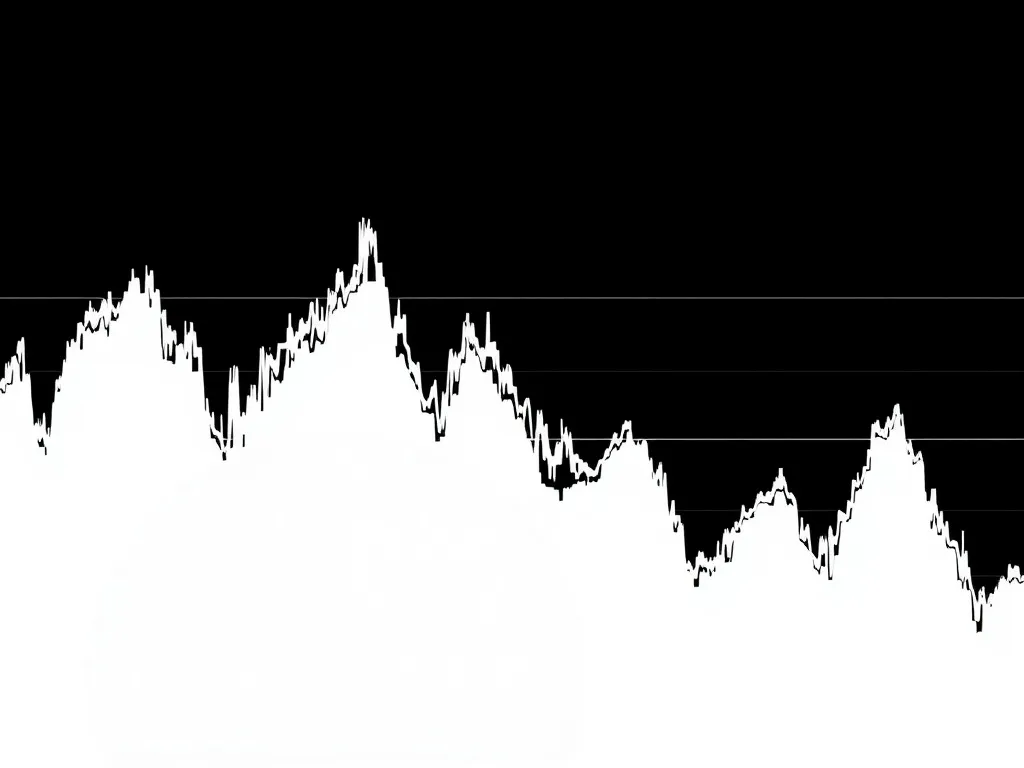
Quantifying the probability of cascading financial failures through rigorous stress-testing of personal liquidity reserves. We analyze the evolution of economic volatility to determine optimal capital buffers.
Once a week we send a digest of the best articles.
Critical Assessment FAQ
Why focus on systemic rather than individual risk?
Individual risks are often isolated, but systemic risks involve correlated failures across multiple sectors. For instance, a job market downturn often coincides with a decline in property values, creating a dual-pressure scenario on your reserves. Understanding these links is vital for maintaining Fund Management Protocols.
How is the 6-month reserve calculated?
We utilize a combination of historical inflation data and modern cost-of-living indices. The calculation accounts for fixed liabilities, variable operational costs, and a 15% margin for unforeseen inflationary spikes that have historically occurred every 12-15 years.
What qualifies as a 'High-Exposure' asset?
Any asset that lacks immediate liquidity or is subject to high market volatility (exceeding 20% annual variance). Systemic risk analysis helps determine which assets should remain outside the emergency reserve to prevent capital erosion during market crashes.
Can reserves be held in non-cash instruments?
Technically, yes, but only in instruments with T+0 or T+1 settlement periods. Our Technical Documentation outlines the specific credit ratings required for cash-equivalent instruments to be considered "safe" for systemic protection.
Liquidity Assurance
Instant access to capital during periods of institutional banking delays or market freezes. We prioritize physical and digital accessibility.
• Zero-day Availability
• Multi-institution Distribution
• Low-volatility Pegging
Inflation Hedging
Dynamic adjustment of reserve totals based on real-time purchasing power parity. We prevent the silent erosion of your safety net.
• CPI-linked Adjustments
• Currency Diversification
• Yield-bearing Cash Equities
Psychological Stability
Reducing the "panic-selling" impulse during systemic crashes by providing a pre-funded operational runway for all primary needs.
• Decision-making Clarity
• Strategic Patience
• Debt Avoidance Cycle
Job Market Stability & Labor Volatility
The modern labor market has transitioned from long-term institutional stability to a fragmented, skill-based economy. This evolution means that the "time-to-rehire" metric has become increasingly unpredictable for high-specialization roles. Historical data suggests that during a recession, the average search for a senior-level position can extend from 3 months to over 9 months.
Rexvorin calculates job market risk by analyzing industry-specific saturation and automation susceptibility. We recommend a reserve that covers not just basic survival, but the costs associated with professional pivot—such as retraining or certification—which are often necessary when a specific sector faces systemic disruption.
Source: Internal Labor Market Volatility Index 2024
Health Contingency & Medical Reserves
Medical emergencies represent the single largest cause of rapid reserve depletion globally. Unlike fixed expenses, health-related costs are non-linear and often occur simultaneously with a loss of income. Our analysis indicates that standard insurance policies frequently leave a 20-30% "coverage gap" in specialized treatments or extended recovery periods.
"The transition from preventative to reactive financial planning usually happens within a 48-hour window of a health crisis. Pre-allocation is the only technical defense against this shift."
We advocate for a dedicated medical sub-fund within your emergency reserve. This capital should be segregated to ensure it is not utilized for secondary maintenance issues, providing a dedicated buffer for physiological and cognitive recovery without compromising long-term assets.
Property Maintenance & Structural Reserves
Real estate assets, while foundational to wealth, carry inherent systemic risks related to structural integrity and environmental factors. The evolution of building standards means that older properties require exponential increases in maintenance capital as they age. A common failure in financial engineering is the "1% Rule," which often underestimates modern material and labor costs.
01. Critical Systems: HVAC, roofing, and electrical infrastructure require replacement cycles every 15-20 years.
02. Regulatory Compliance: Costs associated with evolving energy efficiency mandates and zoning changes.
03. Environmental Adaptation: Fortifying properties against localized climate shifts or seismic activity.
Total Exposure Report Structure
The final phase of our analysis is the consolidation of all risk vectors into a single Total Exposure Report. This document serves as the blueprint for your reserve size. It weighs each risk category by probability and impact, resulting in a "Safety Multiplier" applied to your monthly burn rate.
Risk Factor
Impact Level
Reserve Allocation
Labor Market Exit
Critical
4-6 Months Expenses
Medical Shock
High
Fixed $15k - $50k Buffer
Property Failure
Moderate
2% of Asset Value Annually
Ready to Audit Your Reserves?
Download our full technical framework to begin your systemic risk assessment today. Secure your capital against the evolution of market volatility.